
Wellness · October 12, 2026
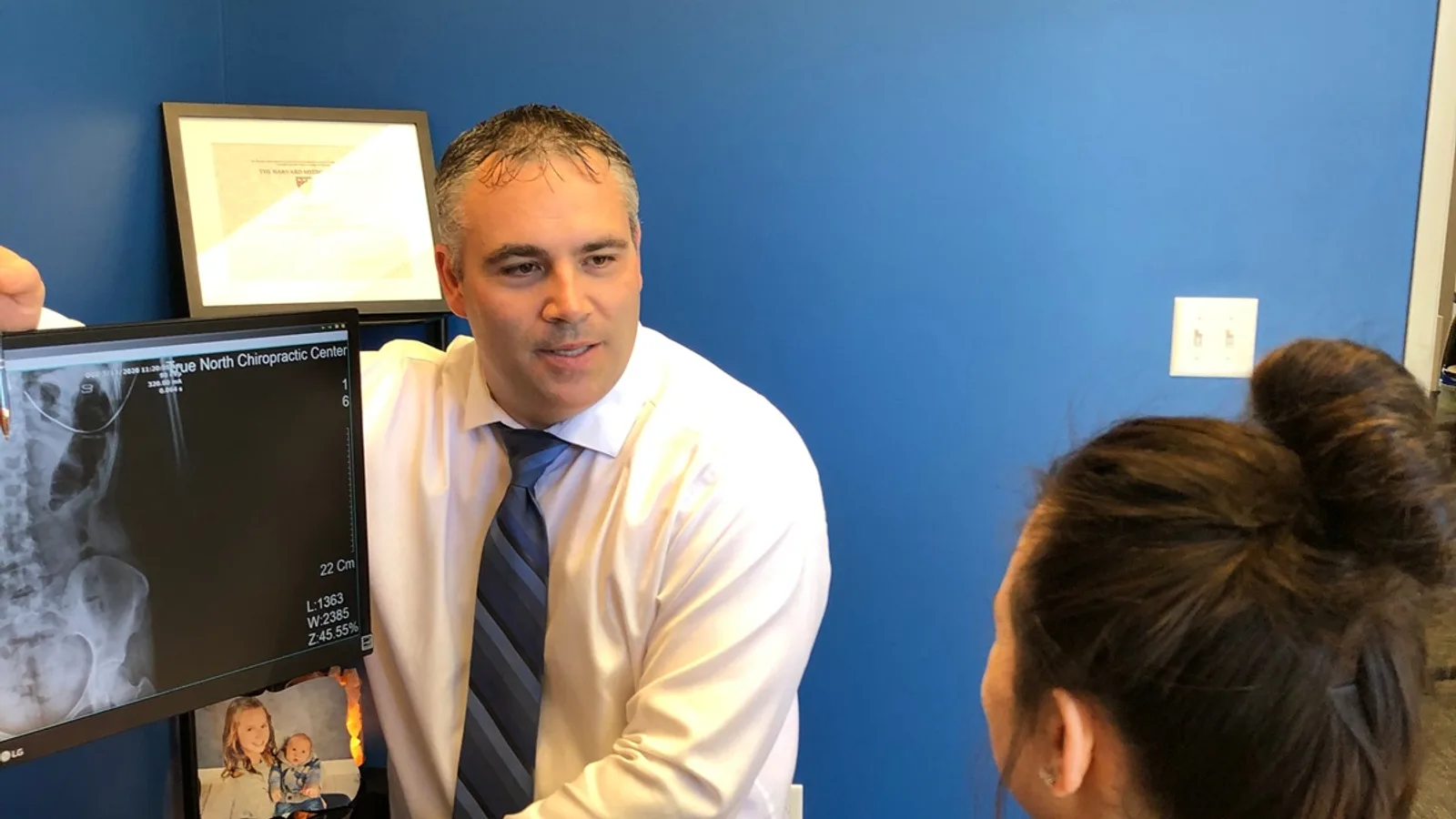
If your neck feels stiff by mid-morning, your upper back aches after a few hours at your desk, or you find yourself rolling your shoulders and wondering why they always seem to creep up toward your ears — you are far from alone. Here in Thief River Falls, we see this pattern constantly at True North Chiropractic Center. What used to be an occasional complaint is now one of the most common reasons working adults walk through our doors. The culprit? A cluster of posture-related problems that have quietly become a genuine public health concern: tech neck, desk slouch, and poor phone posture.
What Is Tech Neck?
Tech neck is the informal term for the strain and pain that develops in the neck, upper back, and shoulders as a result of holding your head in a forward, downward position for extended periods — typically while looking at a phone, tablet, or computer screen. It is not just soreness. Over time, it can alter the natural curve of your cervical spine and place significant stress on the structures that support your head.
What Is Actually Happening to Your Spine
Your head weighs somewhere in the range of ten to twelve pounds when it sits directly over your shoulders in a neutral position. That weight is distributed evenly across the joints, muscles, and discs of your cervical spine. But here is where things get interesting — and concerning. For every inch your head shifts forward from that neutral position, the effective load on your neck roughly doubles. By the time most people are staring down at a phone in their lap or craning forward to read a screen, the mechanical strain on their neck can feel like carrying the equivalent of a much heavier object for hours at a time.
This sustained forward head posture does not just cause muscle fatigue. Over months and years, it can begin to alter the natural lordotic curve of the cervical spine — the gentle inward curve that acts as a shock absorber for your head and upper body. When that curve flattens or reverses, the spine becomes less efficient at distributing force, increasing the risk of disc irritation, joint stress, and chronic muscular tension. Dr. Nathan Weiss sees this mechanical shift regularly in patients who come to True North Chiropractic Center after months of trying to manage their neck pain on their own.
The thoracic spine — the mid-back — is equally affected. Desk slouch refers to the rounding of the upper back that happens when you slump in your chair, allowing the shoulders to round forward and the chest to collapse inward. This posture compresses the front of the thoracic vertebrae, strains the posterior muscles trying to hold everything upright, and limits the rib cage's ability to fully expand during breathing. It is a full-body postural problem, not just a neck issue.
Common Causes of Tech Neck and Desk Slouch
Understanding why these problems develop is the first step toward addressing them. The causes are not complicated, but they are deeply embedded in how most people in Northwest Minnesota — and across the country — spend the majority of their waking hours.
The most obvious driver is screen time. Whether it is eight hours at a computer workstation for work, an hour of scrolling on a phone during breaks, or an evening watching content on a tablet, most adults accumulate an extraordinary number of hours each week with their head in a forward or downward position. Workstations that are not properly set up — monitors too low, chairs without adequate lumbar support, keyboards placed too far away — accelerate the problem significantly.
Smartphones deserve particular attention. The average adult checks their phone dozens of times per day, and the posture most people adopt while doing so — chin dropped toward the chest, shoulders rounding, eyes cast downward — places the cervical spine in one of the most mechanically disadvantaged positions possible. Repeated dozens of times a day over years, this habit adds up to significant cumulative stress on the neck and upper spine.
Sedentary lifestyle and weak core and postural muscles also play a major role. When the deep stabilizing muscles of the neck and mid-back lose their endurance and strength — often because we simply do not use them enough — the body compensates with passive postures that rely on joint compression and muscle tension rather than active support. This is why someone with good postural habits can sit at a desk for hours with far less discomfort than someone whose stabilizers have deconditioned over time.
Signs and Symptoms to Watch For
Tech neck, desk slouch, and phone posture problems do not always announce themselves dramatically. More often, they develop gradually and quietly, which is part of what makes them so easy to dismiss until the symptoms become genuinely disruptive.
Neck stiffness and soreness — particularly at the base of the skull, the sides of the neck, and between the shoulder blades — is usually the first thing people notice. It tends to worsen as the workday progresses and often eases temporarily with movement, only to return. Headaches that originate at the base of the skull and radiate forward are another extremely common complaint. These cervicogenic headaches (headaches originating from the cervical spine) are frequently misidentified as tension headaches and treated with over-the-counter pain relievers that offer temporary relief but do not address the underlying cause.
Shoulder tension, jaw tightness, difficulty looking fully to one side, a sensation of heaviness in the upper traps, and even tingling or numbness into the arms in more advanced cases — these are all signs that posture-related spinal stress may be accumulating. If any of these symptoms sound familiar, it is worth having a proper evaluation rather than continuing to manage around the problem.
Postural Habit | Common Symptom | Spinal Area Affected | Risk If Unaddressed |
|---|---|---|---|
Head forward while looking at phone | Neck soreness, base-of-skull aching | Cervical spine (C1–C7) | Loss of cervical curve, disc irritation |
Slumping in office chair | Mid-back stiffness, fatigue | Thoracic spine (T1–T12) | Postural kyphosis, reduced mobility |
Monitor positioned too low | Eye strain, neck flexion pain | Cervical and upper thoracic spine | Chronic muscle imbalance |
Looking down at laptop for hours | Headaches, shoulder tightness | Cervical spine and shoulder girdle | Nerve irritation, restricted range of motion |
Prolonged sitting without breaks | Lower back stiffness, hip tightness | Lumbar spine and pelvis | Disc compression, weakened stabilizers |
How Chiropractic Care Fits Into the Picture
Chiropractic care is one of the most well-supported conservative, non-surgical options for addressing the musculoskeletal effects of chronic poor posture. At True North Chiropractic Center in Thief River Falls, Dr. Nathan Weiss approaches these cases by first understanding what is actually happening in the spine — not just where it hurts, but why it hurts, and what has been driving the problem over time.
A thorough evaluation helps identify areas of restricted joint movement, muscular imbalance, and postural compensation patterns that have developed. Chiropractic adjustments are designed to restore proper movement to spinal joints that have become stiff or restricted — which is a direct consequence of sustained poor posture. When joints move better, the muscles around them do not have to work as hard to compensate, and the nervous system receives cleaner, less distorted input from the spine.
What sets True North apart from a standard chiropractic office is the range of integrated therapies available under one roof. Intersegmental traction (IST) tables help restore mobility and circulation to spinal segments between adjustments. Shockwave therapy can be used to address deep soft tissue tension that has built up around chronically stressed postural muscles. Onsite rehabilitation allows patients to begin rebuilding the postural strength and endurance they need to maintain the improvements gained through care — because adjustments alone, without addressing the underlying muscle patterns, are only part of the equation.
Evidence from organizations like the American College of Physicians and research published in respected journals supports spinal manipulation as a reasonable first-line approach for non-specific neck pain and musculoskeletal complaints — which is exactly the category that tech neck and desk slouch fall into. Care is always individualized. There is no cookie-cutter protocol here, because no two patients develop or experience postural problems in exactly the same way.
Practical Tips for Better Posture Every Day
Chiropractic care addresses what has already happened to your spine. These daily habits are what keep the problem from coming right back. Dr. Nathan Weiss consistently works with patients on these foundational adjustments because they are simple, cost nothing, and make a measurable difference over time.
Start with your screen height. If you work at a computer, your monitor should be at or just below eye level so your head does not have to tilt down to see the screen. If you use a laptop, consider a separate keyboard and a laptop riser — it is one of the most impactful ergonomic changes you can make. Your chair should support the natural curve of your lower back, and your feet should rest flat on the floor without straining.
Phone habits matter more than most people realize. When you check your phone, try raising it to eye level rather than dropping your chin to meet it. It feels awkward at first — because you have trained your body to expect the head-down position — but it significantly reduces the cumulative load on your cervical spine throughout the day.
Movement breaks are non-negotiable. Sitting — even with perfect posture — is a static load on the spine. Standing up, walking briefly, or doing a few gentle shoulder rolls and chin tucks every thirty to forty-five minutes gives your postural muscles a chance to reset and prevents the gradual creep into slouch that most people experience as the day wears on. Setting a quiet phone reminder is a simple and surprisingly effective strategy that many of our patients in Thief River Falls have found helpful.
Strengthening the muscles that support upright posture — the deep cervical flexors, mid-back extensors, and shoulder retractors — is the longer-term solution. This is where onsite rehabilitation at True North Chiropractic Center becomes genuinely valuable, because these exercises need to be specific to what your body is actually missing, not just generic gym movements.
When It Is Time to See a Chiropractor
A little neck stiffness after a long day is not automatically a reason for alarm. But there are clear signals that what you are experiencing has crossed the line from minor discomfort into something that warrants a professional evaluation.
If neck pain or upper back stiffness has been present consistently for more than two to three weeks, if it is interfering with your ability to work comfortably or sleep well, or if you are relying on over-the-counter medications more than occasionally to manage it — those are all good reasons to come in. Recurring headaches that seem to start at the neck, a noticeable reduction in how far you can turn your head, or any tingling, numbness, or weakness into the arms should be evaluated sooner rather than later.
There are also red flag symptoms that warrant immediate medical attention rather than chiropractic care: severe neck pain following a fall or collision, progressive weakness or numbness in both arms or legs, difficulty walking or with coordination, or any bowel or bladder changes. These symptoms require urgent evaluation by a physician. True North Chiropractic Center is committed to getting every patient to the right level of care — and that includes recognizing when a referral is the most appropriate next step.
Myths vs. Facts About Tech Neck
Myth: Tech neck is just soreness — it will go away on its own.
Fact: While mild muscle soreness from a long day can resolve with rest, the structural changes that develop from years of forward head posture — including loss of cervical curve and muscular imbalance — do not simply correct themselves without intervention. Ignoring persistent symptoms often allows the problem to become more entrenched over time, not less.
Myth: Only people who work at computers all day develop these problems.
Fact: Phone posture is an equally significant driver of tech neck, and it affects people across all professions and age groups. Anyone who spends meaningful time looking down at a device — regardless of whether they have a desk job — can develop postural stress in the cervical spine.
Myth: Chiropractic adjustments are just for back pain.
Fact: Chiropractic care addresses the entire spine, including the cervical and thoracic regions most affected by tech neck and desk slouch. Evidence supports spinal manipulation for neck pain specifically, and the integrated approach at True North Chiropractic Center goes well beyond a single adjustment.
Myth: If you just sit up straight, tech neck will fix itself.
Fact: Improved posture awareness is a genuinely helpful first step, but it is not sufficient on its own for most people. If the underlying spinal joints are restricted, the muscles are imbalanced, and the natural cervical curve has already been affected, correcting your posture without addressing those structural realities will only take you so far.
Myth: These problems only affect older adults.
Fact: Tech neck is increasingly being observed in younger adults and even adolescents who have grown up with heavy smartphone use. The musculoskeletal consequences are not age-dependent — they are habit-dependent. That said, adults between their mid-thirties and mid-sixties who combine long workdays with significant screen time outside of work tend to accumulate the most significant cumulative strain.
Final Thoughts from True North Chiropractic Center
Here in Thief River Falls and across Northwest Minnesota, the way we work and live has changed faster than most of our bodies have been able to adapt. The rise of remote work, longer screen hours, and the near-constant pull of smartphones has created a genuinely new set of physical demands on the human spine — and the consequences are showing up in chiropractic offices and medical clinics everywhere.
The good news is that these are not irreversible problems. With the right evaluation, the right care, and the right daily habits, most people dealing with tech neck, desk slouch, and phone posture issues can make meaningful progress. At True North Chiropractic Center, Dr. Nathan Weiss and our team are committed to doing more than just helping you feel better temporarily. We want to find what is actually driving your symptoms, explain it to you clearly, and build a plan that helps you get back to the work, the activities, and the people that matter most to you.
If any of what you have read here sounds like your day-to-day reality, we would genuinely encourage you to come in for an evaluation. You do not have to keep managing around pain that has a real explanation and a real path forward. True North Chiropractic Center is here — and so is a clearer picture of what is possible when the right care is applied.
Frequently Asked Questions
Can tech neck cause headaches?
Yes. Cervicogenic headaches — headaches that originate from dysfunction in the cervical spine — are a well-recognized consequence of forward head posture and neck muscle tension. They typically begin at the base of the skull and can radiate forward toward the forehead or behind the eyes. Addressing the underlying cervical spine issues often helps reduce the frequency and intensity of these headaches.
How long does it take to correct tech neck with chiropractic care?
The timeline varies depending on how long the problem has been developing, how significant the structural changes are, and how consistently a patient applies home recommendations. Some people notice meaningful improvement in symptoms within a few weeks. Restoring proper spinal mechanics and postural muscle function typically takes longer and is a gradual process rather than a quick fix.
Is it safe to get chiropractic adjustments in the neck?
Cervical chiropractic adjustments are widely considered safe when performed by a licensed, trained chiropractor following a proper examination. Dr. Nathan Weiss performs a thorough evaluation before recommending any specific technique, and care is always tailored to what is appropriate for each individual patient's condition and history.
What is the difference between tech neck and a muscle strain?
A muscle strain is typically an acute injury resulting from overexertion or sudden force. Tech neck, by contrast, is a cumulative, postural stress pattern that develops slowly over time. It usually involves not just muscular tension but also restricted spinal joints, altered cervical curve, and muscular imbalance — making it a more complex and layered problem than a straightforward strain.
Do I need to take X-rays before starting care?
Whether imaging is recommended depends on your specific presentation and history. At True North Chiropractic Center, Dr. Nathan Weiss uses a thorough clinical evaluation process to determine what diagnostic information is needed to develop an accurate and effective care plan. Imaging is used when it provides meaningful clinical value, not routinely for every patient.
Can I help my tech neck at home without coming in?
Home strategies — screen height adjustments, movement breaks, phone posture correction, and gentle exercises — can meaningfully reduce symptoms for some people, especially in the early stages. However, if your symptoms are persistent, recurring, or affecting your daily function, a professional evaluation is the most reliable way to understand what is actually happening and address it effectively.
TL;DR Summary
Tech neck, desk slouch, and poor phone posture are genuine musculoskeletal health concerns that develop gradually through sustained forward head position and prolonged sitting.
The forward head position increases mechanical load on the cervical spine significantly and can, over time, alter the spine's natural curve and lead to disc, joint, and nerve irritation.
Common symptoms include neck stiffness, upper back tension, recurring headaches, and reduced range of motion — all of which deserve professional evaluation if persistent.
Chiropractic care, particularly the integrated approach available at True North Chiropractic Center in Thief River Falls, addresses both the structural and muscular components of these postural problems.
Daily habits — including screen height, movement breaks, and phone posture adjustments — are essential to long-term improvement and work best alongside professional care when the problem is already established.